The British Armed Forces remain one of the most professional, technologically advanced, and globally active militaries in the world. While smaller in size than Cold War–era forces, today’s UK military is optimized for high-intensity warfare, expeditionary operations, and alliance-led combat, especially alongside NATO and close partners like the United States.
This in-depth profile explores how the UK fights modern wars, its strengths and limitations, and its role as a leading Western military power.
Strategic Outlook and Military Doctrine
Britain’s military strategy is shaped by three realities:
- It is an island nation
- It is a nuclear-armed power
- It operates primarily within alliances
UK doctrine emphasizes:
- Expeditionary warfare rather than mass armies
- Maritime and air dominance
- NATO collective defense
- Deterrence through nuclear weapons and advanced technology
- Rapid deployment forces for global crises
The UK sees itself as a security provider, not just for Europe but globally—especially in the North Atlantic, Middle East, and Indo-Pacific.
Defense Budget and Spending Priorities
The United Kingdom consistently ranks among the top 10 global defense spenders, with annual military expenditure exceeding £50 billion.
Key spending priorities include:
- Nuclear deterrent modernization
- Aircraft carriers and naval aviation
- Cyber and space capabilities
- Advanced fighter aircraft
- Intelligence and special forces
Unlike manpower-heavy militaries, the UK invests heavily in quality, readiness, and interoperability.
British Army: Smaller but Highly Professional

The British Army has transitioned from a large Cold War force into a high-readiness professional army.
Structure and Role
- Around 75,000 active personnel
- Focus on rapid deployment and NATO reinforcement
- Specialized in armored warfare, airborne forces, and training missions
Key Equipment
- Challenger 3 main battle tank (modernized)
- Ajax reconnaissance vehicles
- AS90 self-propelled artillery
- Advanced infantry weapons and ISR systems
While smaller than many peer armies, the British Army is highly respected for training, discipline, and combat experience.
Royal Navy: Backbone of UK Global Power

The Royal Navy is central to Britain’s global military posture.
Naval Strength
- Two large aircraft carriers
- Nuclear-powered attack submarines
- Ballistic missile submarines
- Advanced air-defense destroyers
Flagship Capabilities
- Queen Elizabeth–class aircraft carriers
- Type 45 destroyers (among the world’s best air-defense ships)
- Astute-class submarines with cruise missile capability
The Royal Navy enables Britain to project air power globally, protect sea lanes, and contribute meaningfully to NATO maritime dominance.
Royal Air Force: Precision and Global Reach
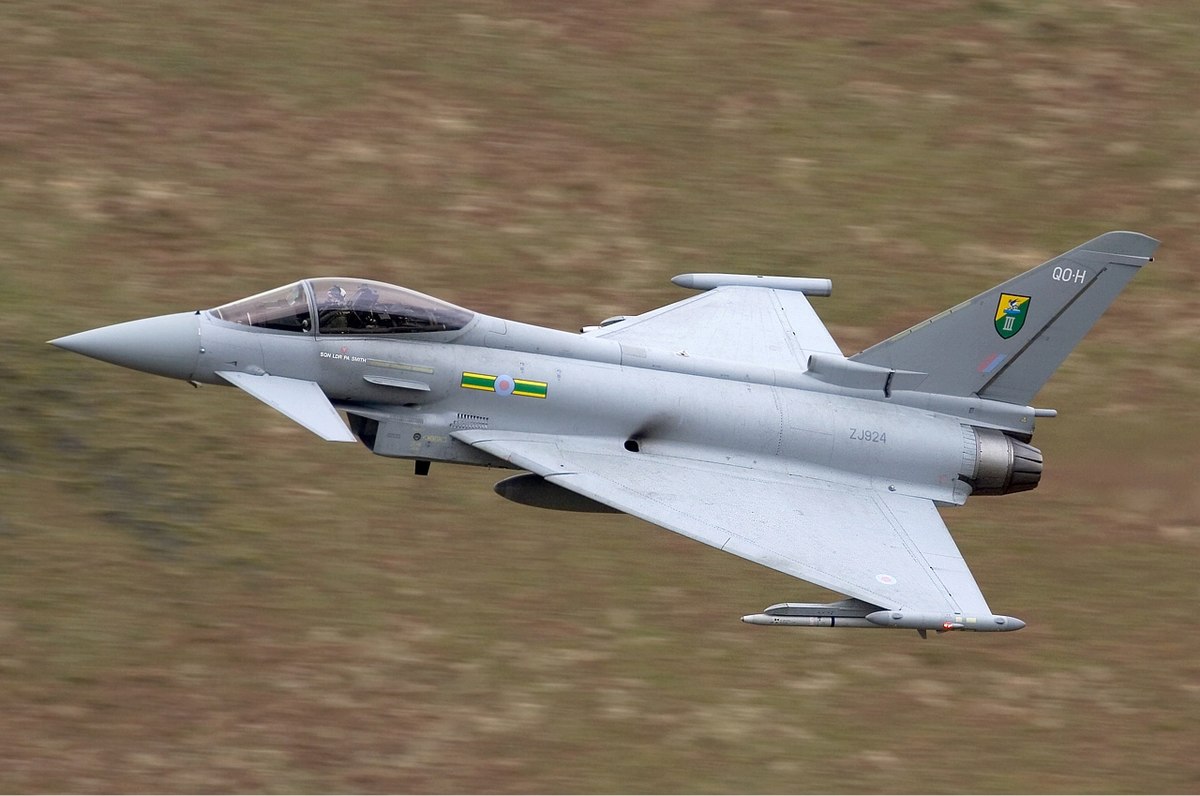
The Royal Air Force is one of the most technologically advanced air forces in Europe.
Key Aircraft
- F-35B Lightning II (stealth strike & carrier operations)
- Eurofighter Typhoon (air superiority & multirole)
- C-17 Globemaster III strategic transport
- Voyager aerial refueling fleet
The RAF excels in precision strikes, rapid global deployment, and integrated air operations with allies.
UK Nuclear Deterrent: Continuous At-Sea Deterrence

The UK maintains a credible nuclear deterrent based entirely at sea.
The UK Strategic Deterrent relies on:
- Vanguard-class ballistic missile submarines
- Trident II D5 submarine-launched ballistic missiles
At least one UK nuclear submarine is always on patrol, ensuring second-strike capability and strategic deterrence.
Cyber, Space, and Intelligence Dominance

The UK is a global intelligence and cyber power, far exceeding what its size might suggest.
Key strengths include:
- Offensive and defensive cyber warfare
- Military satellite communications (Skynet system)
- Close intelligence cooperation with allies
- Electronic warfare and space situational awareness
Britain places heavy emphasis on information dominance in future conflicts.
Special Forces: Among the World’s Best
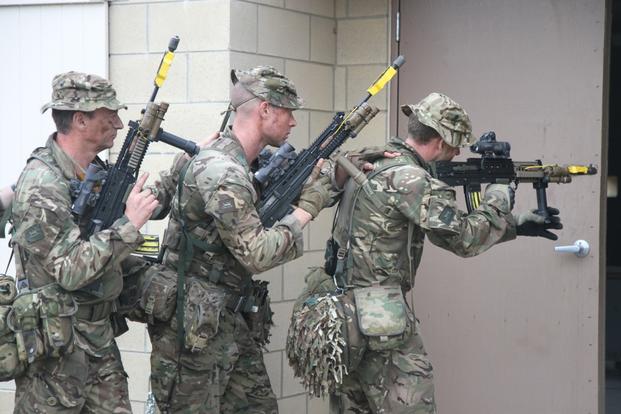
UK Special Forces are legendary and highly secretive.
Elite units include:
- Special Air Service (SAS)
- Special Boat Service (SBS)
They specialize in:
- Counterterrorism
- Direct action
- Special reconnaissance
- Hostage rescue
British special forces are regarded as among the most capable on Earth.
Defense Industry and Indigenous Capability

The UK maintains a strong domestic defense industry.
Major players include:
- BAE Systems
- Rolls-Royce (defense engines)
- MBDA UK
Britain leads in:
- Naval shipbuilding
- Submarine technology
- Radar and electronic warfare
- Jet engines and aerospace design
Strengths, Weaknesses, and Future Direction
Strengths
- Highly trained professional forces
- Strong navy and nuclear deterrent
- World-class intelligence and cyber capability
- Deep alliance integration
Weaknesses
- Limited manpower
- Equipment availability challenges
- Heavy reliance on allies for sustained large wars
Future Focus
- Indo-Pacific presence
- Carrier strike operations
- Cyber and space warfare
- NATO deterrence against Russia
The United Kingdom is not a mass-army power—but it is a precision military power. Its strength lies in technology, professionalism, intelligence, and alliances, not sheer numbers.
When operating alone, the UK excels in limited, high-impact operations. When operating with allies, especially NATO and the United States, it becomes a decisive force multiplier.
In the modern era, the British Armed Forces remain small, sharp, nuclear-armed, and globally relevant.





0 Comments