Few firearms have reshaped modern military sidearms like the Glock 17. Since its introduction in the early 1980s, this Austrian-designed pistol has become the standard or preferred handgun for dozens of armed forces, police units, and special operations teams worldwide. Its rise wasn’t driven by tradition or prestige—but by simplicity, reliability, and brutal efficiency.
This blog takes a deep, technical, yet reader-friendly look at why the Glock 17 dominates military service, how it works internally, and what makes it so effective on the battlefield.

Origins: A Radical Design That Changed Everything
The Glock 17 was developed by Glock for the Austrian Army’s handgun trials. At the time, Glock was not even a traditional gunmaker. What it delivered shocked the firearms world:
- A polymer-framed pistol (unheard of then)
- Fewer parts than competitors
- Exceptional reliability in dirt, mud, and extreme climates
- High-capacity magazine as standard
What began as a gamble soon became a global military standard.
Why Militaries Choose the Glock 17
Militaries prioritize function over form, and the Glock 17 delivers exactly that.
Key reasons for adoption:
- Extremely high reliability under combat conditions
- Simple internal design with fewer failure points
- Lightweight yet durable polymer frame
- Large magazine capacity (17 rounds standard)
- Easy maintenance in field conditions
- Long service life with minimal parts replacement
From NATO armies to special forces in Asia, Africa, and the Middle East, the Glock 17 is trusted as a last-resort lifesaving weapon.
Glock 17 Technical Specifications (Military Standard)
- Caliber: 9×19mm Parabellum
- Magazine Capacity: 17 rounds (standard)
- Operation: Short recoil, striker-fired
- Frame: Polymer
- Weight (unloaded): ~625 g
- Effective Role: Secondary / sidearm weapon
How the Glock 17 Works (Detailed Mechanism)

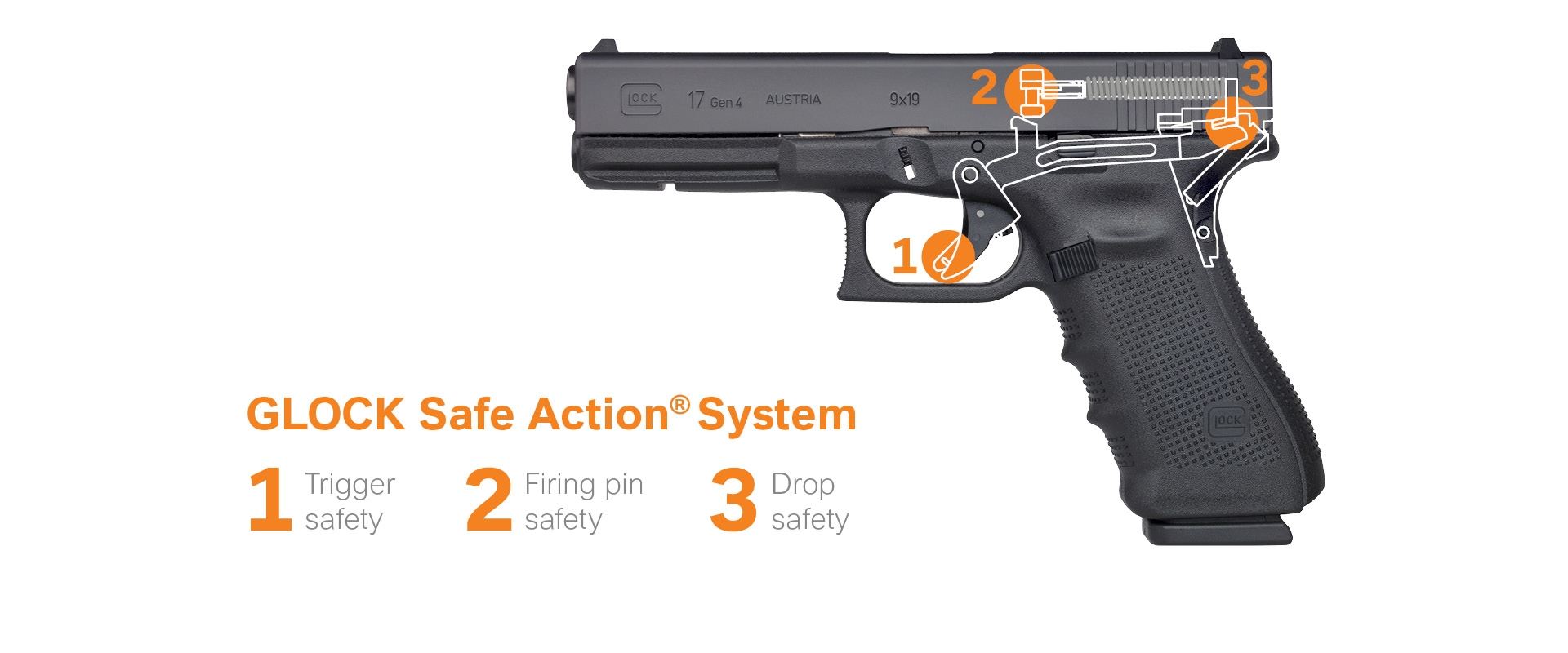
Unlike traditional hammer-fired pistols, the Glock 17 uses a striker-fired system with what Glock calls the Safe Action mechanism. This system balances simplicity, safety, and speed.
1. Striker-Fired Operating Principle
- The Glock has no external hammer
- Instead, it uses an internal spring-loaded striker
- When the trigger is pressed, the striker is fully tensioned and released in one smooth motion

This reduces:
- Mechanical complexity
- External snag points
- Time to fire
2. Short-Recoil Operation (High-Level Explanation)
The Glock 17 operates using a short-recoil, locked-breech system, common in modern pistols:
- The slide and barrel initially move together under recoil
- After a short rearward movement, the barrel tilts slightly
- This unlocks the slide, allowing it to move independently
This design:
- Absorbs recoil efficiently
- Reduces stress on components
- Improves durability
The Glock Safe Action System (Three Internal Safeties)
The system includes:
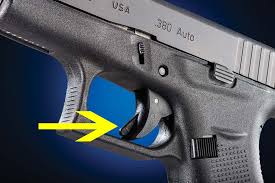
🔹 Trigger Safety
- A lever integrated into the trigger
- Prevents rearward movement unless intentionally pressed
🔹 Firing Pin Safety
- A spring-loaded block that physically prevents striker movement
- Disengages only during a deliberate trigger press
🔹 Drop Safety
- Prevents the striker from releasing if the pistol is dropped or impacted
Together, these ensure:
- The pistol will not fire accidentally
- Immediate readiness without manual disengagement
Magazine & Feeding System
The Glock 17 uses a double-stack magazine, a major advantage when it was introduced.
Key features:
- Polymer-coated steel magazine body
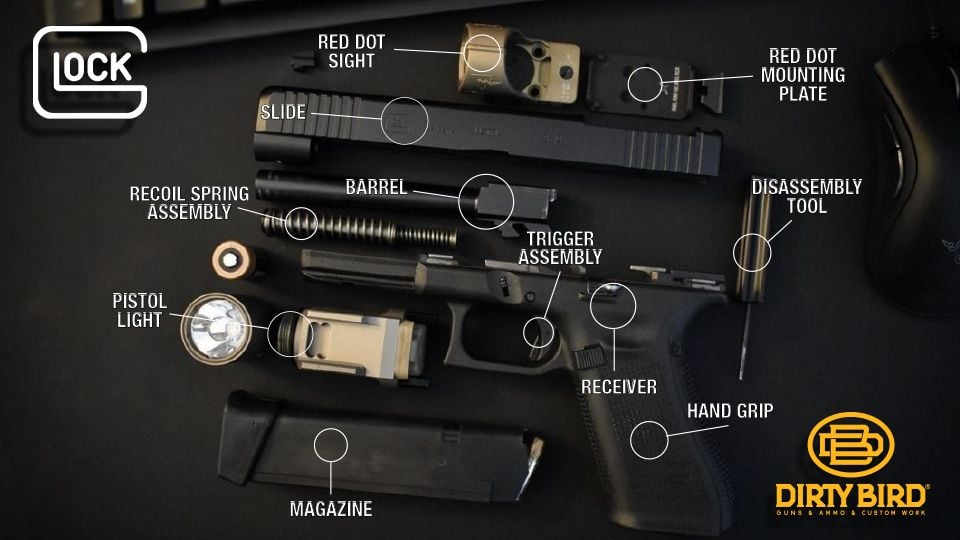
- Strong feed lips for reliability
- Consistent feeding under high stress
- For soldiers, this means:
- More ammunition without increasing weapon size
- Faster reload cycles
- Reduced need to carry spare magazines
Combat Role: Why Pistols Still Matter
In modern warfare, pistols are not primary weapons—but they are critical backup tools.
Typical military uses:
- Emergency defense when rifle is unavailable
- Vehicle crews and pilots
- Close-quarters battle (CQB)
- Special forces covert operations
- Military police and base security
- The Glock 17 excels because it can be:
- Drawn quickly
- Fired reliably in confined spaces
- Used effectively with minimal training time
- Safety during airborne, vehicle, and urban operations

Strengths and Limitations
Strengths
- Exceptional reliability
- Simple and rugged design
- High capacity
- Minimal maintenance
- Universal availability
Limitations
- Lacks manual safety (training-dependent)
- Basic sights in standard configuration
- Grip angle not preferred by all users
Global Military Adoption
The Glock 17 or its variants are used by:
- European armed forces
- Asian and Middle Eastern militaries
- African defense forces
- Numerous NATO-aligned units
Its presence across continents reinforces its status as the most widely used military pistol in the world.
The Glock 17 is not glamorous. It does not carry historical romance or ornate craftsmanship. What it offers instead is absolute dependability—and that is exactly what soldiers need.
Its internal simplicity, smart safety design, and battlefield toughness have made it a benchmark sidearm, influencing nearly every modern military pistol that followed.
In the world of military firearms, the Glock 17 is proof that simplicity wins wars.





0 Comments