India has emerged as one of the most important military powers of the 21st century. Positioned at the crossroads of South Asia, the Indian Ocean, and the Indo-Pacific, the Indian Armed Forces play a decisive role in regional stability, deterrence, and great-power competition.
With one of the world’s largest standing forces, a growing defense budget, nuclear weapons, and expanding indigenous defense production, India is steadily transitioning from a regional military power to a credible global security actor.
Strategic Geography and Military Doctrine
India’s military thinking is shaped by complex geography and persistent security challenges. It faces:
- A hostile western border with Pakistan
- An unresolved and tense northern frontier with China
- Vast maritime responsibilities across the Indian Ocean
Indian military doctrine emphasizes:
- Credible minimum deterrence (especially nuclear)
- Defensive-offensive posture (holding ground while retaining escalation options)
- Jointness and integration across services
- Strategic autonomy, avoiding overdependence on any single alliance
India does not pursue global power projection like the United States, but it seeks regional dominance and extended reach in the Indian Ocean Region (IOR).
Defense Budget and Military Spending
India has the fourth-largest defense budget globally, exceeding $75 billion, with steady annual increases.
Spending priorities include:
- Force modernization
- Indigenous weapons development
- Border infrastructure and logistics
- Naval expansion and air power upgrades
A major portion of the budget still goes to personnel and pensions, but capital procurement is steadily increasing—especially under the Make in India initiative.
Indian Army: Backbone of National Defense
The Indian Army is the largest component of India’s military and one of the biggest armies in the world.
Structure and Role
- Over 1.2 million active personnel
- Organized into multiple commands focused on Pakistan, China, and internal security
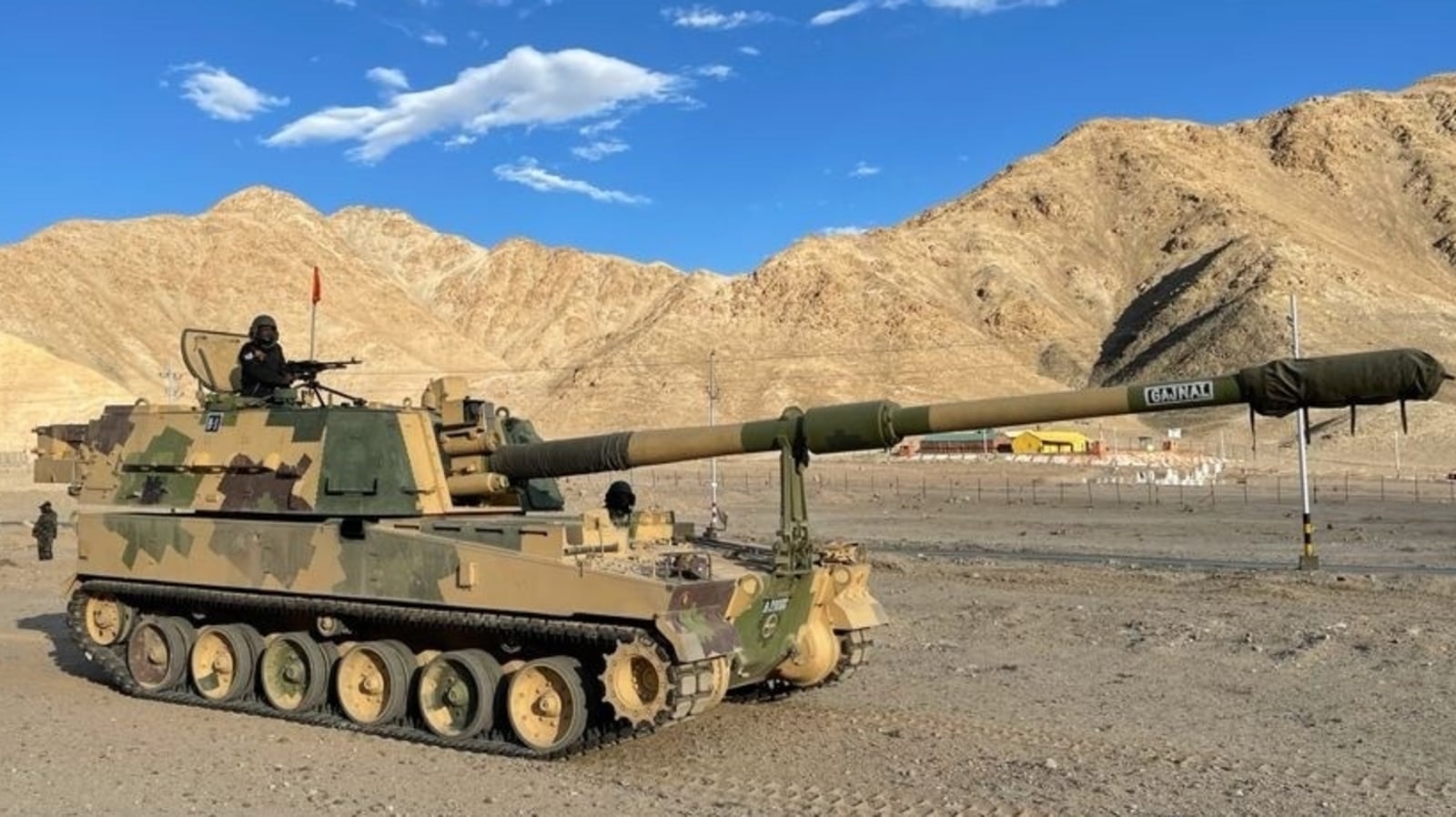
- Specialized mountain strike corps for high-altitude warfare
Key Equipment
- T-90 Bhishma and T-72 main battle tanks
- Arjun Mk1A indigenous tank
- K9 Vajra-T self-propelled artillery
- Pinaka multi-barrel rocket system
Expanding drone and loitering munition inventory
The Indian Army excels in mountain warfare, counterinsurgency, and large-scale troop deployment, though modernization remains uneven.
Indian Navy: Guardian of the Indian Ocean

The Indian Navy is the most technologically advanced of India’s services and central to its great-power ambitions.
Naval Strength
- Two aircraft carriers (INS Vikramaditya & INS Vikrant)
- Nuclear-powered ballistic missile submarines
- Modern destroyers, frigates, and corvettes
Strategic Focus
- Sea lane protection
- Deterrence against China in the Indo-Pacific
- Power projection and humanitarian operations
India’s navy is transitioning toward a blue-water force, capable of sustained operations far from home ports.
Indian Air Force: Expanding Reach and Precision
 The Indian Air Force provides India with air superiority, deep strike capability, and rapid response power.
Key Aircraft
- Su-30MKI multirole fighters (backbone of the IAF)
- Rafale fighter jets with advanced sensors and weapons
- Tejas indigenous light combat aircraft
- C-17 and C-130J strategic transport aircraft
While squadron numbers remain a concern, qualitative improvements have significantly enhanced India’s air combat capability.
Strategic Forces and Nuclear Deterrence

India is a declared nuclear-armed state with a clear doctrine of No First Use.
The Strategic Forces Command controls India’s nuclear arsenal.
Nuclear Triad
- Land-based missiles: Agni series (Agni-I to Agni-V)
- Sea-based deterrent: INS Arihant-class SSBNs
- Air-delivered nuclear weapons
This triad ensures a credible second-strike capability, a cornerstone of Indian strategic stability.
 Space, Cyber, and Emerging Domains
India has rapidly expanded into non-traditional domains:
- Military satellites for surveillance and communication
- Demonstrated anti-satellite (ASAT) capability
- Dedicated cyber and space defense agencies
These capabilities reflect India’s understanding that future wars will extend beyond land, sea, and air.
Special Forces and Internal Security
Elite units include:
- Para SF (Army)
- MARCOS (Navy)
- Garud (Air Force)
They specialize in counterterrorism, special reconnaissance, cross-border operations, and maritime special warfare.
Indigenous Defense Industry: From Importer to Producer

India is the world’s largest arms importer—but that is changing.
Key indigenous achievements:
- Tejas fighter aircraft
- BrahMos supersonic cruise missile
- Arjun main battle tank
- Advanced radars, UAVs, and missiles
Organizations like DRDO, HAL, and private firms are driving a slow but steady transformation toward self-reliance.
Strengths, Weaknesses, and the Road Ahead
Strengths
- Massive manpower
- Nuclear deterrence
- Strong navy and missile forces
- Growing indigenous production
Weaknesses
- Equipment diversity and logistics complexity
- Slow procurement processes
- Fighter squadron shortfalls
Future Focus
- Joint theater commands
- Indigenous jet engines and fighters
- Hypersonic weapons
- Expanded space and cyber warfare capabilities
India today stands as a formidable military power with enormous growth potential. While it does not yet match the global reach of the United States or the industrial speed of China, its balanced force structure, nuclear deterrence, and strategic geography give it immense influence.
As reforms deepen and indigenous production matures, the Indian Armed Forces are poised to become one of the most decisive military forces of the coming decades—not just in South Asia, but on the global stage.





0 Comments