Leftists’ Favorite Streamer Calls Fall Of Soviet Union ‘One Of The Greatest Catastrophes Of 20th Century’
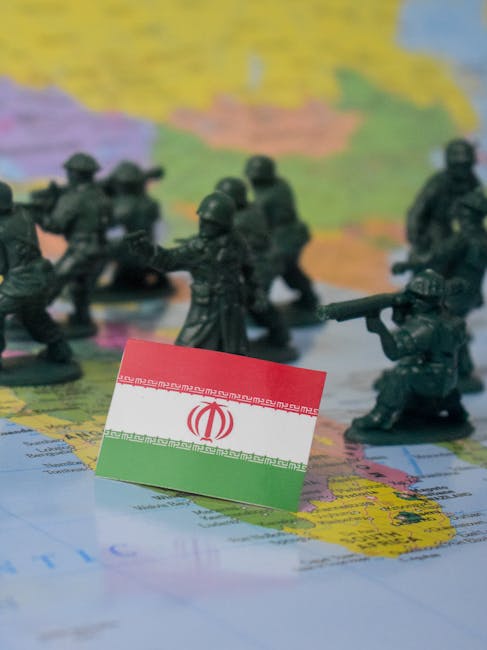 **Geopolitical Tectonic Shifts: Assessing the Evolving Global Security Landscape**
Introduction
The global security landscape has undergone a significant transformation in recent years, driven by a complex interplay of geopolitical, economic, and technological factors. This shift has far-reaching implications for national security strategies, international relations, and the global balance of power. In this article, we will delve into the key drivers of this transformation, assess the emerging trends and patterns, and explore the implications for defence planning and policy-making.The Rise of Multipolarity
The unipolar moment, characterized by US dominance in the post-Cold War era, has given way to a multipolar world. The emergence of new global powers, particularly China and India, has led to a redistribution of economic and military power. This shift has resulted in a more complex and contested international environment, with multiple centres of power and influence. The rise of regional powers, such as the European Union, Russia, and Japan, has further accentuated this trend.| Country | Military Expenditure (2020) | GDP (2020) |
|---|---|---|
| United States | $721 billion | $22.67 trillion |
| China | $261 billion | $16.14 trillion |
| India | $67 billion | $2.76 trillion |
| Russia | $65 billion | $1.73 trillion |
The Resurgence of Great Power Rivalry
The return of great power rivalry has been a significant feature of the evolving security landscape. The intensifying competition between the United States and China, in particular, has significant implications for global security. This rivalry is driven by a complex mix of economic, military, and ideological factors, and is being played out across multiple domains, including trade, technology, and cyberspace.The increased rivalry has led to a surge in military modernization efforts, with both countries investing heavily in cutting-edge technologies, such as artificial intelligence, hypersonic weapons, and quantum computing. The expansion of Chinese military presence in the South China Sea and the Indian Ocean has raised concerns about the potential for conflict in these regions.
The Evolution of Military Technology
The rapid advancements in military technology have fundamentally altered the nature of modern warfare. The development of new domains, such as space and cyberspace, has opened up new avenues for conflict. The proliferation of precision-strike capabilities, autonomous systems, and advanced sensors has increased the tempo and complexity of military operations.The growing reliance on network-centric warfare and the fusion of intelligence, surveillance, and reconnaissance (ISR) capabilities has created new vulnerabilities and opportunities for exploitation. The increasing use of artificial intelligence and machine learning in military applications has the potential to revolutionize military decision-making and operations.
Implications for Defence Planning and Policy-Making
The evolving security landscape has significant implications for defence planning and policy-making. Governments and militaries must adapt to a more complex and contested environment, characterized by the blurring of traditional boundaries between war and peace, and the increasing importance of non-kinetic forms of warfare.Key priorities for defence planners and policymakers include:
- Developing strategies to manage great power rivalry and competition
- Investing in advanced technologies to maintain a military edge
- Enhancing cybersecurity and resilience in the face of emerging threats
- Building robust partnerships and alliances to address shared security challenges
- Fostering greater transparency and cooperation in the development and deployment of advanced military technologies



0 Comments